Best Time of Year for a Vancouver Helicopter Tour
When to book a Vancouver helicopter tour: the driest months, clearest skies, season-by-season views, and why a sunny day matters more than the calendar.
A Coast Mountain landing helicopter tour is a visual-flight experience, which means the single biggest factor in your day is not the month on the calendar — it is whether the sky is clear. A blue-sky morning in February can outshine an overcast afternoon in July. Still, the seasons stack the odds differently, and knowing how they trade off helps you pick a date that maximises your chance of flying, landing in the alpine, and seeing the peaks at their best.
The short answer: a clear day beats a “good month”
These flights operate under visual flight rules, so low cloud, fog, or steady rain can delay, reschedule, or cancel a slot. The operator will move your flight rather than fly in marginal visibility — that is a safety call, not an inconvenience. What usually triggers a hold is a low cloud ceiling pressing against the mountains: Canadian day-VFR sightseeing rules require the pilot to keep visual reference to the ground and stay clear of cloud, so when the deck sits low over the peaks the flight waits for it to lift rather than push into it. Because of that, the smartest move is less about chasing a perfect month and more about giving yourself flexibility: book a morning slot, allow a buffer day in your itinerary, and call SKY Helicopters the day before to confirm conditions.
Morning is the consistent recommendation. Coastal air over Vancouver tends to be calmer and clearer earlier in the day, before afternoon cloud builds against the mountains. There is a photographer’s bonus, too: in the first hour or so after sunrise the sun sits low and rakes across the Coast Mountains at a shallow angle, picking out every ridge, gully, and snowfield in warm light and long shadow. On a clear day that low-angle “golden hour” light can last roughly 30 to 45 minutes before the sun climbs and flattens the scene — another reason to take the first flights of the day if your schedule allows a choice.
Season by season
Each season delivers a genuinely different version of the Coast Mountains. None is “wrong” — they simply suit different travellers.
| Season | Conditions | What you get | Trade-off |
|---|---|---|---|
| Summer (Jun–Sep) | Longest days, driest weather, best odds of clear skies | Green alpine valleys, exposed peaks, alpine lakes | Books up fastest; reserve early |
| Autumn (Oct–Nov) | Crisp light, fewer crowds, more changeable weather | Sharp visibility on clear days, first snow on summits | Higher chance of a weather hold |
| Winter (Dec–Mar) | Cold, snow-loaded peaks, dramatic light when it flies | The most cinematic mountains; quiet skies | More cancellations; flights only when weather permits |
| Spring (Apr–May) | Warming, melting snowpack, waterfalls running high | Snow on peaks plus rushing glacial creeks | Variable; shoulder-season unpredictability |
Summer — the safe bet
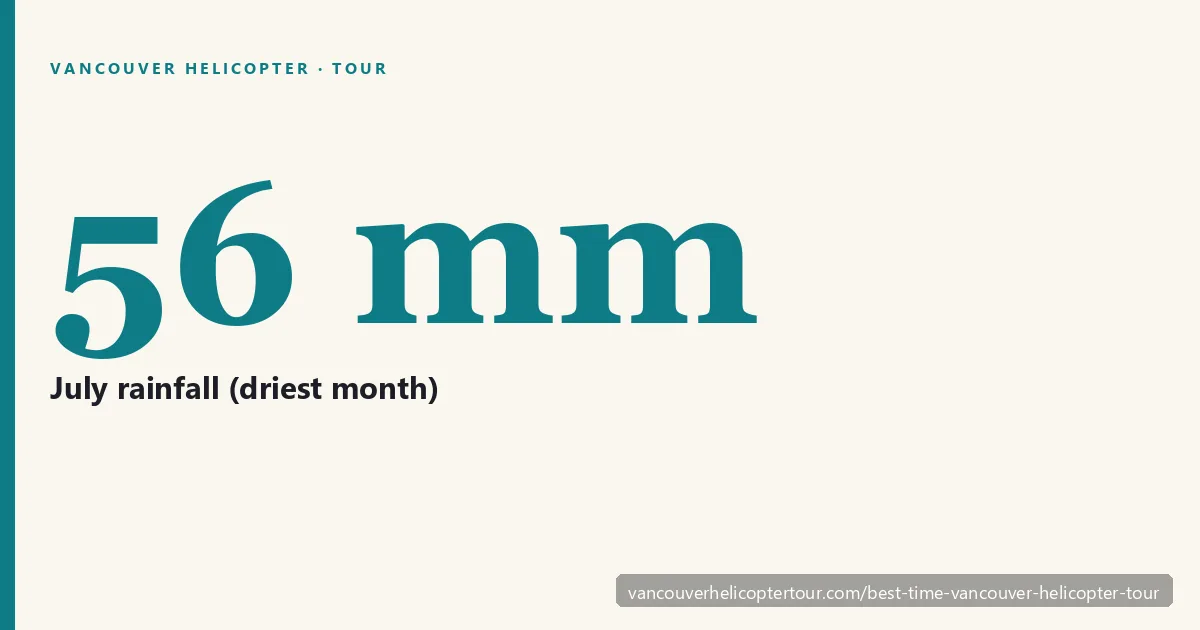
If you want the highest probability of actually flying, summer is it. July and August are Vancouver’s driest months, and the long daylight gives you the widest window of flyable morning slots. The catch is demand: summer fills first, so book ahead, especially for weekend mornings.
Autumn — the value window
Once the summer rush eases, autumn offers crisp air and fewer people, often with excellent visibility on the clear days between systems. You trade a little weather certainty for thinner crowds and beautiful low-angle light on the ridgelines.
Winter — the dramatic one
When winter weather cooperates, the snow-loaded Coast Mountains are arguably their most spectacular. Travellers who have flown in January describe snow-dusted peaks, low cloud sitting in the valleys, and blue-green water below. The price of that drama is unpredictability — more flights are held or rescheduled, so build in flexibility.
Vancouver weather, by the numbers
Vancouver has a classic coastal pattern: dry, sunny summers and wet winters. That rhythm is the backbone of any flight-timing decision.
| Period | Rough rainfall picture | Flying outlook |
|---|---|---|
| July | Driest month (around 56 mm) | Best odds of clear skies |
| August | Still very dry (around 75 mm) | Excellent, books up early |
| November | Wettest month (around 344–362 mm), rain about 70% of days | Most weather holds |
| Jun–Jul daylight | Roughly 9–10 hours of sunshine per day | Widest slot availability |
These are climate normals, not forecasts — the actual day is what matters. Use them to weight your booking, then watch the short-range forecast and confirm by phone.
How to give yourself the best shot
- Book a morning slot. Clearer air, calmer conditions, and more daylight to reschedule into if needed.
- Leave a buffer day. If the weather holds your flight, you want a second chance before you leave town.
- Confirm by phone. GetYourGuide does not pass your contact details to the operator, so call SKY the day before to check your time and conditions.
- Lean on free cancellation. Your booking can be cancelled free up to 24 hours before departure, so reserving early in a busy season carries little risk.
For the full route — Pitt River, Pitt Lake, the Widgeon waterfall, and the alpine landing — see what to expect on the alpine landing. If you are weighing aircraft, our helicopter vs seaplane comparison breaks down which one fits the day you want.
Ready to Book?
The Coast Mountain Landing Helicopter Tour flies year-round whenever conditions allow, with free cancellation up to 24 hours before departure — so you can book the season you want and adjust if the weather turns. Pick a clear morning, and the Coast Mountains will do the rest.
See the Coast Mountains from the Sky
Join the 25 guests who rated this Vancouver helicopter tour a perfect 5.0/5. A 30-minute flight over the Coast Mountains plus an exclusive alpine landing — booked through GetYourGuide with free cancellation up to 24 hours before departure.
Check Availability & Book